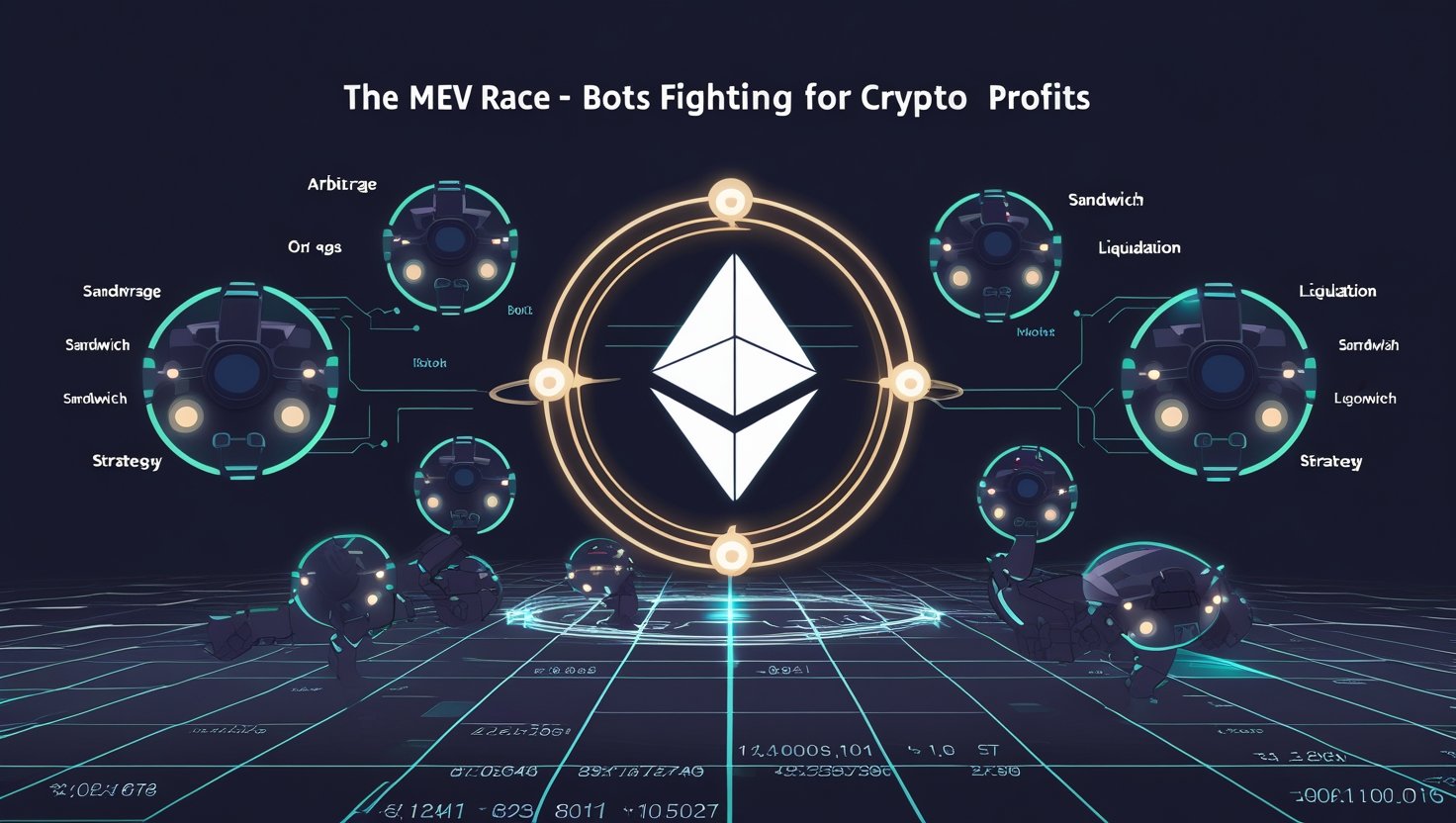
Have you ever made a trade on a decentralized exchange (DEX) and noticed the price wasn’t what you expected? It might be because of MEV. This stands for Maximal Extractable Value, and it’s a huge deal in crypto. It’s essentially a “race” where bots attempt to generate a profit from transactions occurring on the blockchain. Let’s explore what this MEV race is all about and what it means for you.
What is MEV?
At its core, MEV is the extra profit that miners, validators, and bots can get by changing the order of transactions in a block. Think of a blockchain like a public to-do list for transactions. Everyone can see what’s on the list before it’s “done” (put into a block). This transparency is what creates opportunities for MEV.
This isn’t just about transaction fees. It’s about clever strategies that take advantage of how transactions are processed. While the term originally meant “Miner Extractable Value,” it’s now called “Maximal Extractable Value” because it applies to anyone who can influence transaction order, not just miners.
The MEV Race: Bots on the Hunt:
The MEV race is the intense, split-second competition between specialized computer programs, or MEV bots, to find and win these profit opportunities. These bots are constantly monitoring the “mempool”, a queue for pending transactions.
When a bot sees a big, profitable transaction about to happen (like a large trade that will change a token’s price), it jumps into action. The bot’s goal is to get its own transaction in the same block, either before or after the original transaction, to make a profit. This is where the “race” comes in. The bots compete by bidding up the transaction fees, trying to get their transaction processed first.
Here are some of the most common ways these bots fight for profits:
- Front-Running: A bot sees a large buy order and places its own smaller buy order just before it. The large order pushes the price up, and the bot sells for an easy profit.
- Sandwich Attacks: This is a mix of front-running and “back-running.” The bot buys a token before a user’s trade and then sells it right after, “sandwiching” the user’s transaction. This can cause the user to get a worse price.
- Arbitrage: A bot finds a price difference for the same token on two different exchanges. It quickly buys the token on the cheaper exchange and sells it on the more expensive one, all in a single transaction. This helps keep prices in line but is a key source of MEV profit.
What Does the MEV Race Mean for Users?
The MEV race isn’t just for bots. It affects every single person who uses a blockchain.
- Higher Fees: The bidding wars between MEV bots drive up transaction fees for everyone, making it more expensive to use the network.
- Bad Prices: You might get a worse price than you expected on a trade because a bot front-ran you. This is known as “slippage.”
- Network Congestion: All the extra transactions from these bots can clog up the blockchain, slowing down the network for everyone.
On the other hand, some argue that MEV also provides a good service. Arbitrage bots, for example, help make markets more efficient by making sure prices are consistent across different exchanges.
Conclusion:
The MEV race is a defining part of today’s blockchain world. It shows how powerful bots can be in a transparent system. While MEV can make markets more efficient, the fierce competition for profits can also lead to higher costs and a less fair experience for everyday crypto users. Knowing about the MEV race helps you better understand the hidden forces at play when you use a decentralized network.
FAQs:
1. What does MEV stand for?
MEV stands for Maximal Extractable Value.
2. Are MEV bots legal?
Yes, in most cases, MEV bots operate in a legally gray area and are not illegal.
3. Does MEV only happen on Ethereum?
No, MEV can happen on any blockchain where validators can reorder transactions.
4. How can I protect myself from MEV?
You can use services like Flashbots or private transaction pools.
5. Is MEV always bad for users?
Not always, as some MEV (like arbitrage) can help make markets more efficient.
6. What is a “sandwich attack”?
A sandwich attack is when a bot places trades before and after a user’s transaction to profit from the price change.